Quarterly mortgage market summary
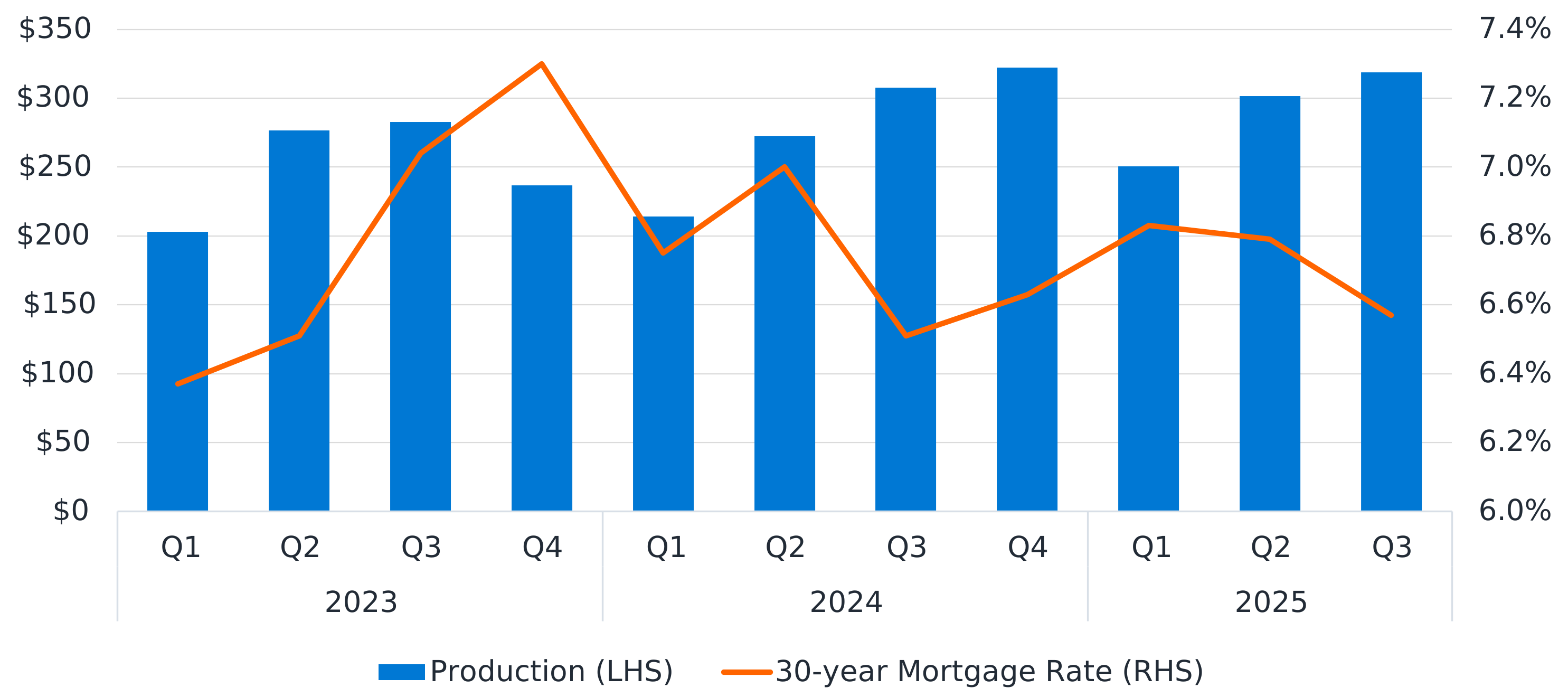
Mortgage securitizations increased 4% in the third quarter (Q3) 2025 on a year-over-year basis, but remain suppressed as a result of persistently high interest rates and general pressure on the affordability of new homes. Securitization volumes of new agency mortgages (Fannie Mae, Freddie Mac, and Ginnie Mae) were $319 billion for Q3, based on estimates from Milliman M-PIRe Securitization and Valuation Software.
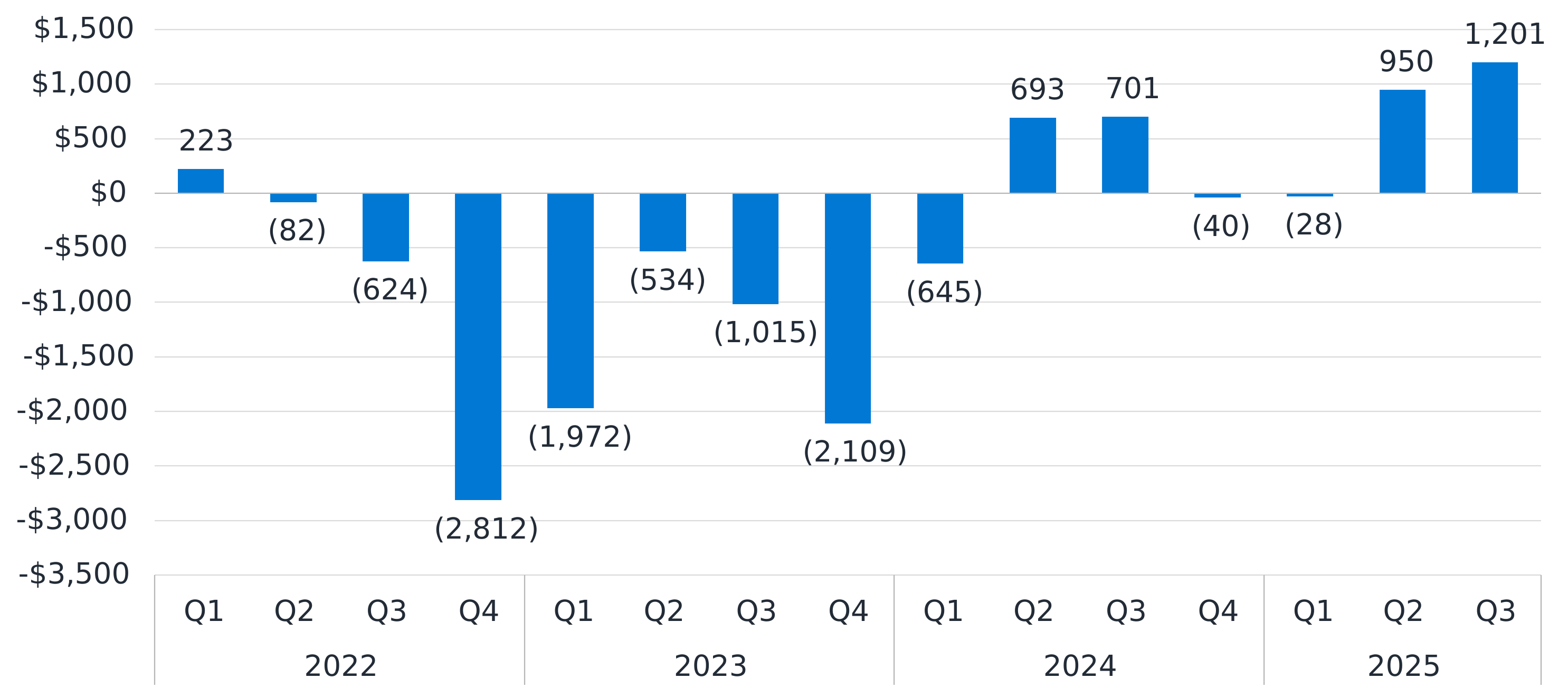
Mortgage lenders remained profitable during the quarter, with the average lender generating a profit of $1,201 for each loan originated in Q3 2025. This is an increase from $950 in Q2 2025 and is the most profitable quarter since 2021.1
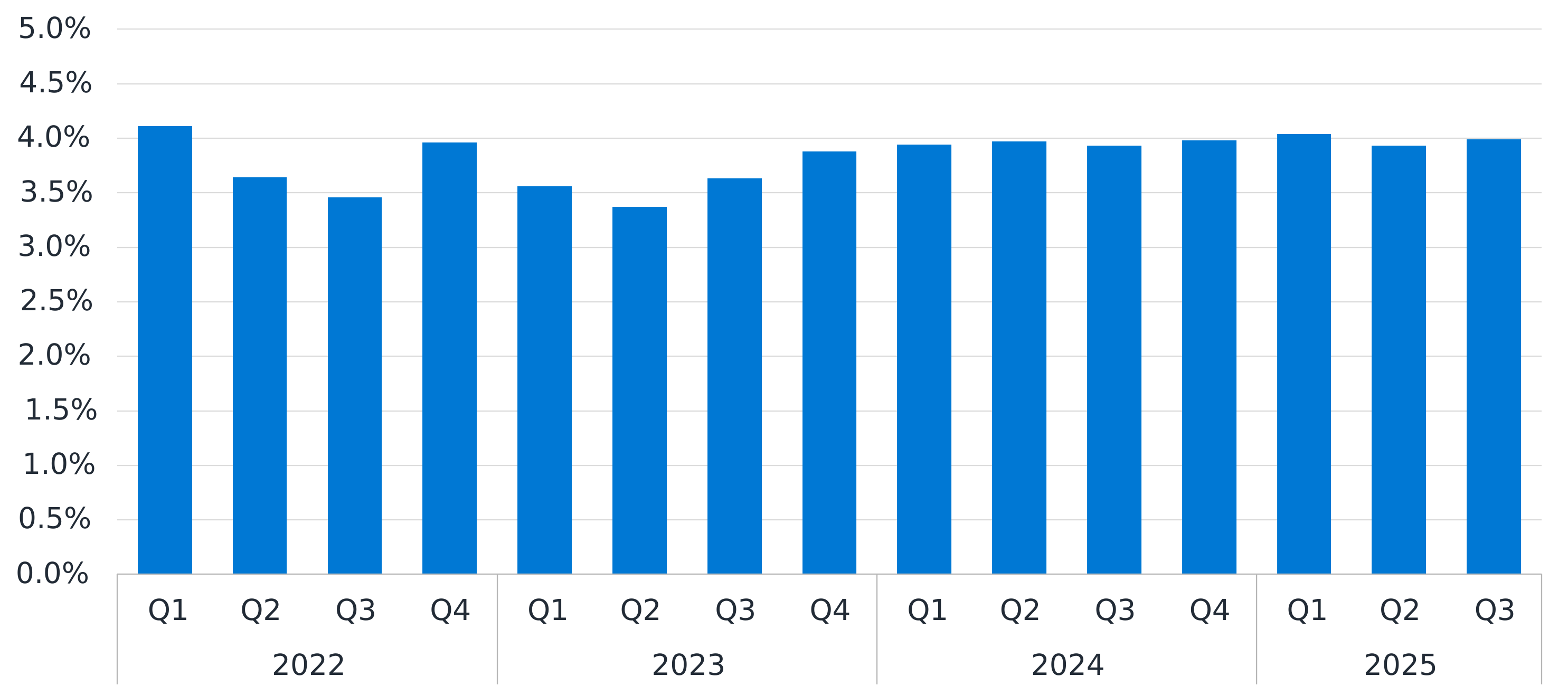
Agency mortgage loan delinquencies have risen year-over-year, increasing from 3.9% in Q3 2024 to 4.0% in Q3 2025.2
With the onset of the seasonally slower half of the origination year (Q4 and Q1) and continued headwinds with stubborn inflation readings, we expect the next several quarters to follow recent origination and profitability trends.
Purchase and refinance origination trends
Based on data from Milliman M-PIRe, single-family agency mortgage securitizations rose 3.6% year-over-year from $308 billion in Q3 2024 to $319 billion in Q3 2025. This increase was due to a pickup in refinance activity, which rose 23% year-over-year, whereas purchase mortgages decreased by 1% year-over-year. The 30-year mortgage rate is down 22 basis points from Q2 2025 but has increased 6 basis points year-over-year, averaging 6.57% in Q3 2025. A small change in securitization activity is consistent with the small downward movement in rates.
Figure 1: Agency mortgage securitizations ($ billions) and the 30-year mortgage rate
Source: Milliman M-PIRe, FRED
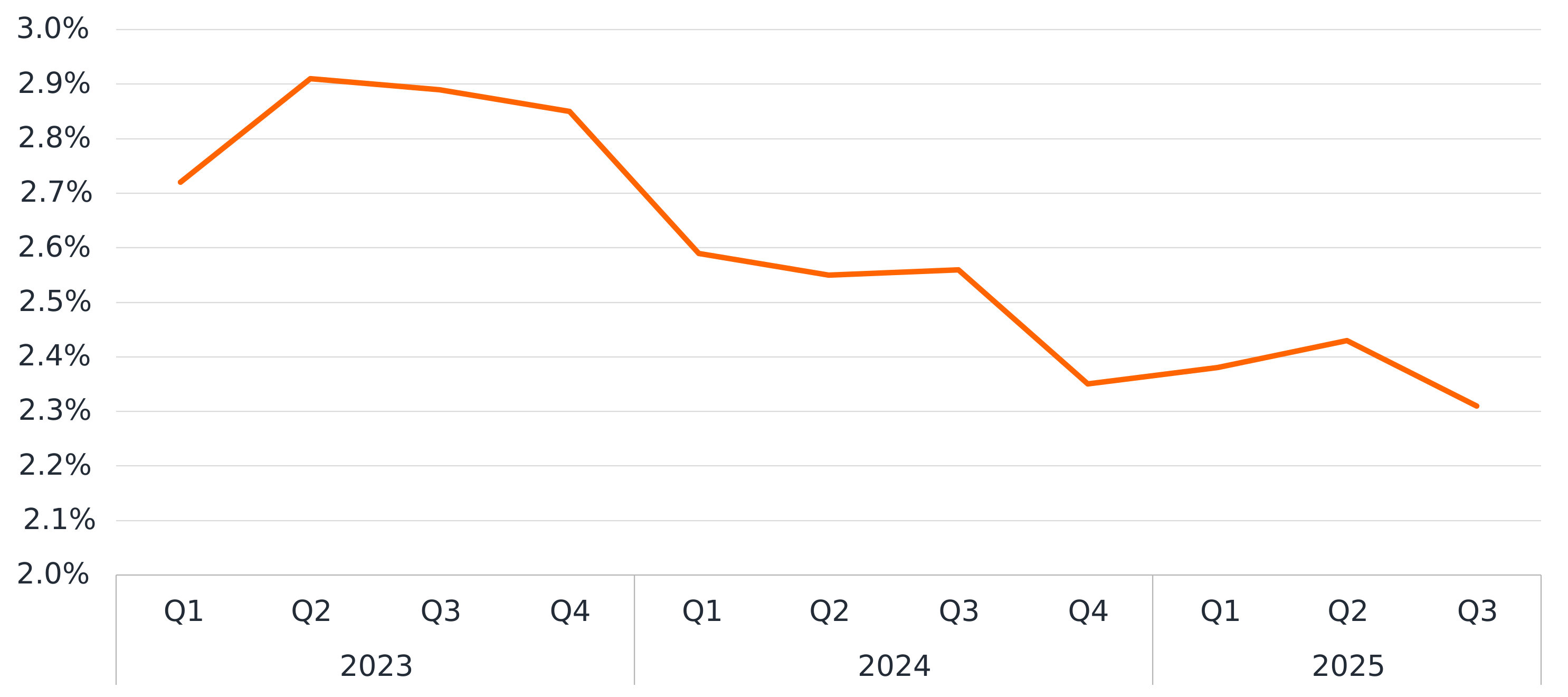
The Primary–Secondary (30-year mortgage to 10-year Treasury) spread is down 25 basis points year-over-year and down 12 basis points from Q2 2025, continuing the downward trend that began in Q2 2023.3 The Primary–Secondary spread has moved in general correlation with Treasury yields; thus, a decrease in those yields will create additional mortgage rate relief as the spread also decreases.
Figure 2: The primary-secondary spread
Source: FRED
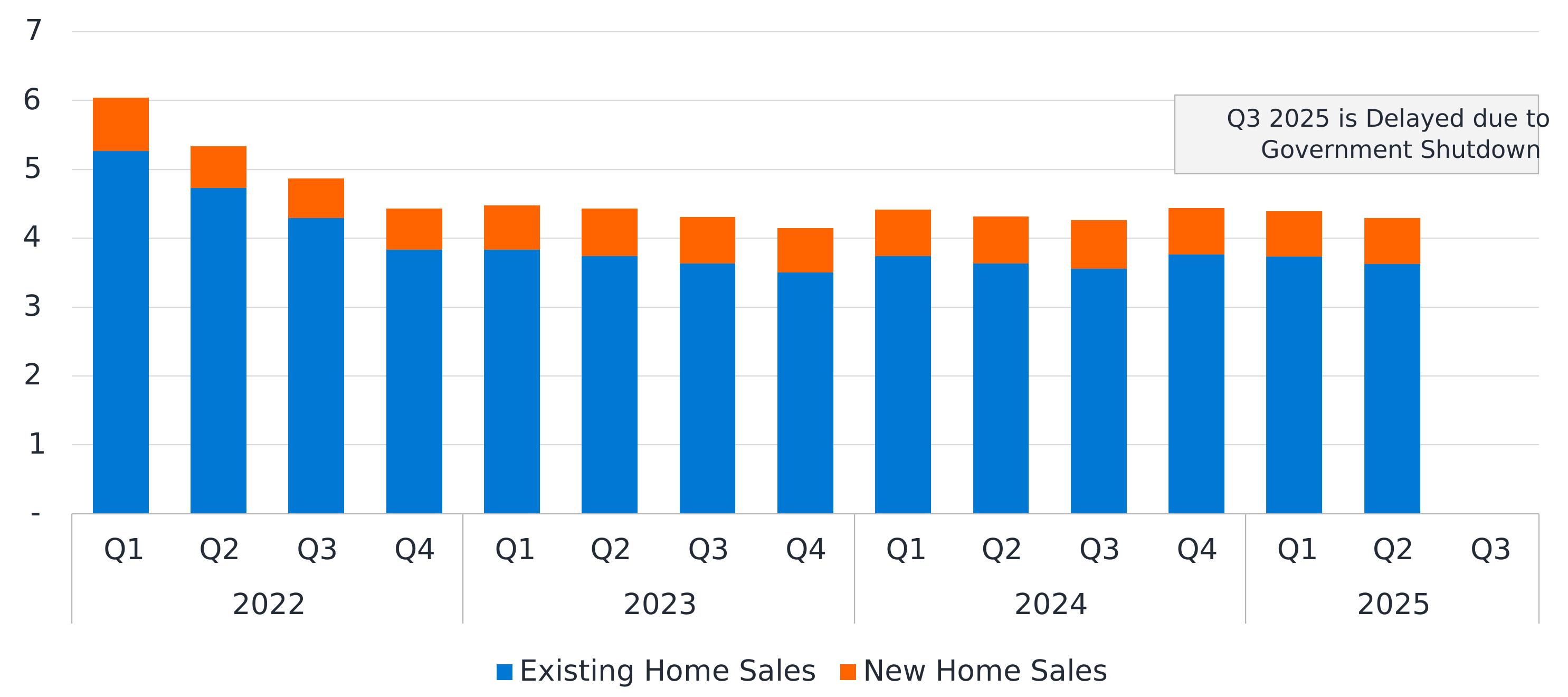
Existing home sales increased in Q3 2025, with year-over-year sales up 3%. New home sales for Q3 2025 have yet to be reported due to a delay caused by the government shutdown.4 We also observe a rise in total home supply, which has increased 10% since Q3 2024. A downward trend in interest rates will likely boost purchase activity, given heightened inventory levels, and lead to increases in construction activity.
Figure 3: Existing and new home sales annualized (millions)
Source: Moody’s Analytics
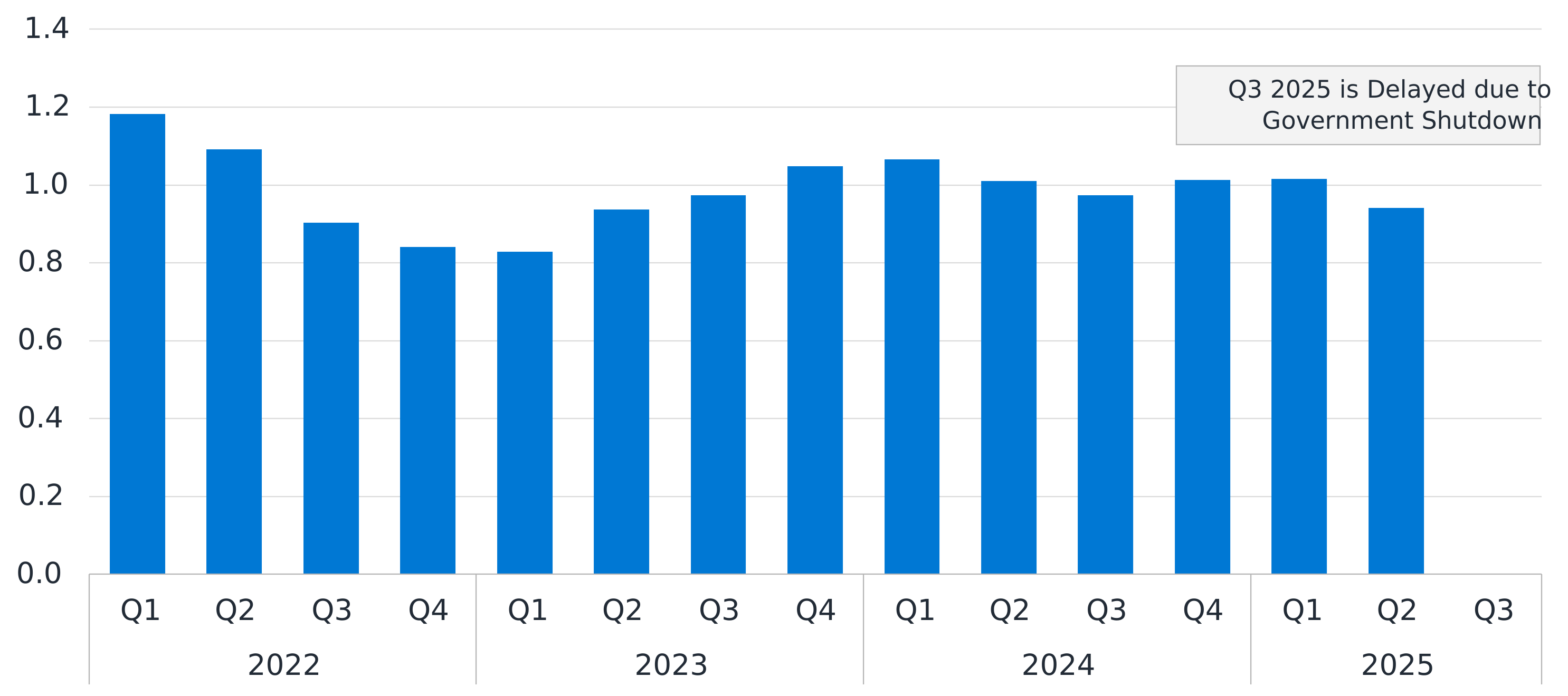
Figure 4: Single family starts annualized (millions)
Source: Moody’s Analytics
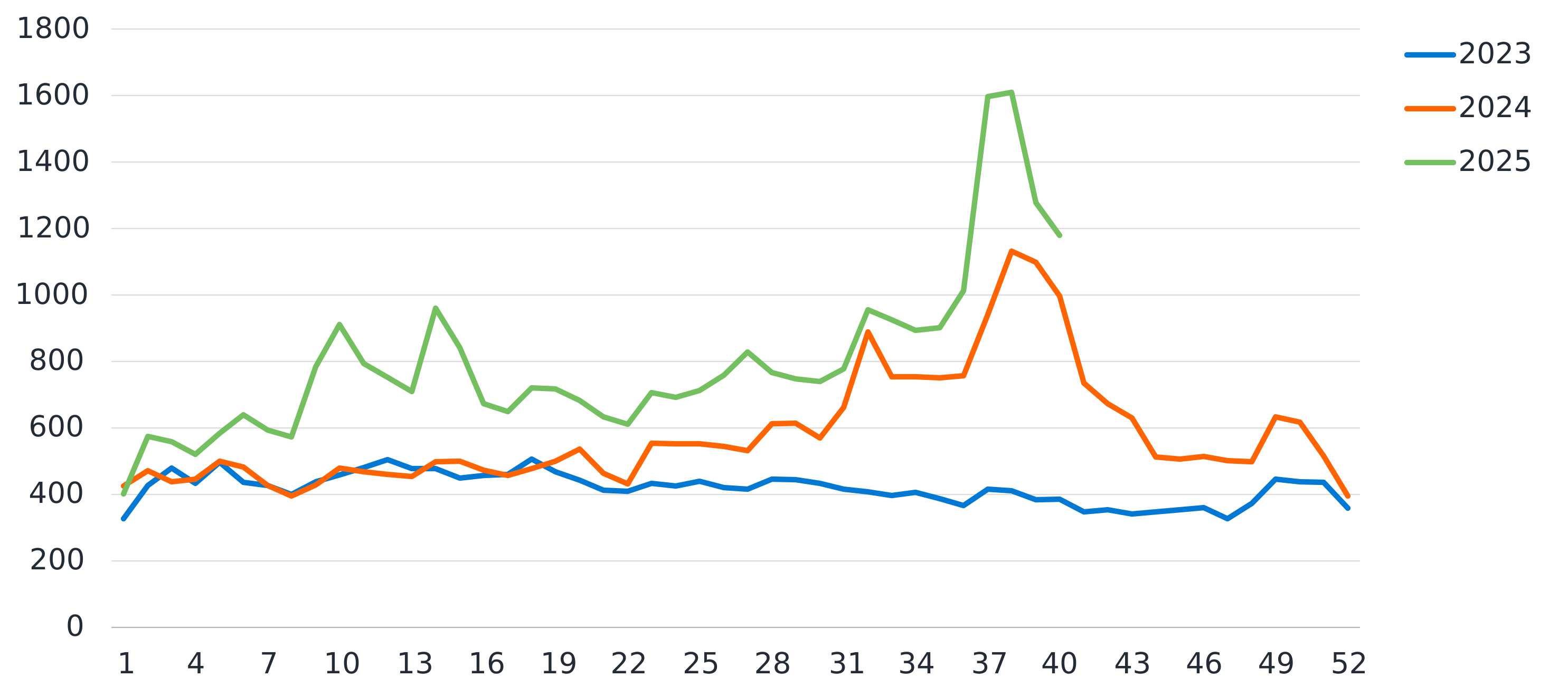
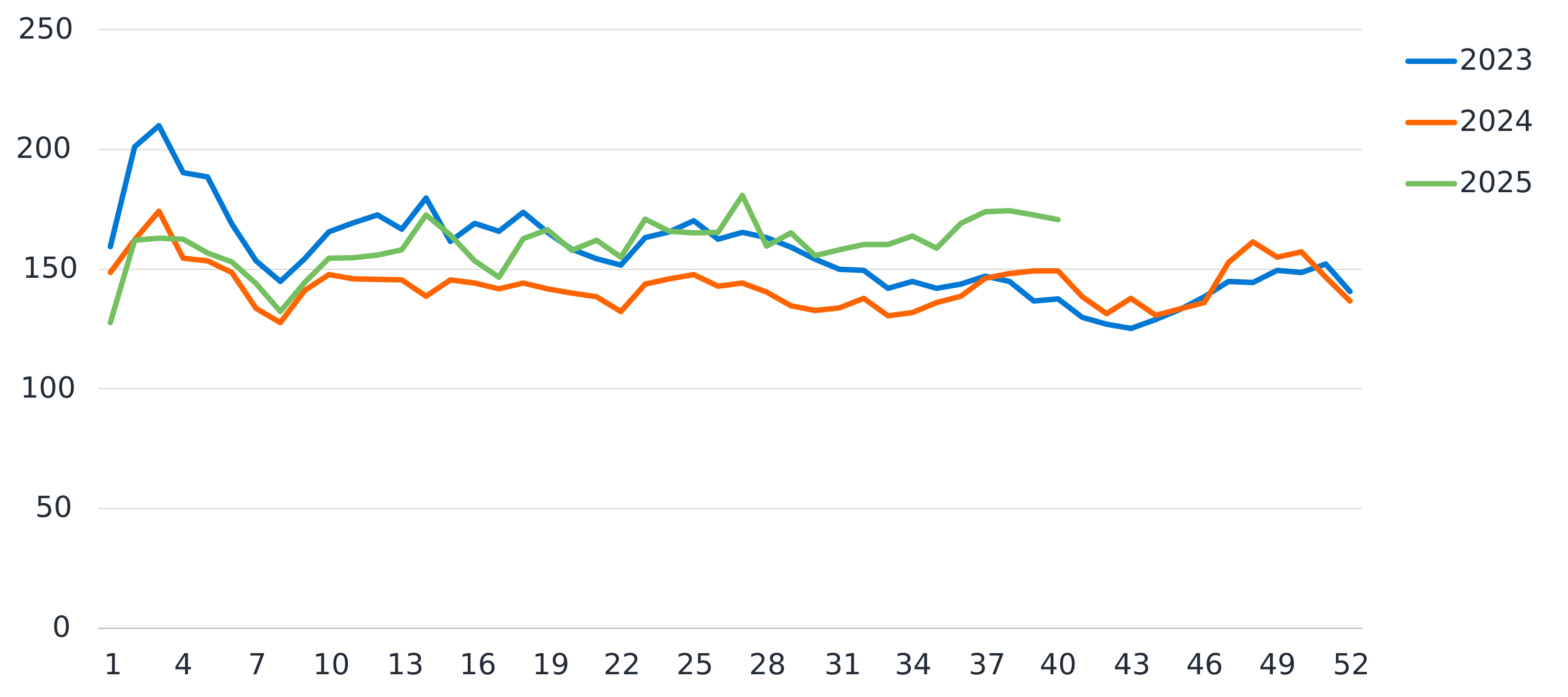
According to the Mortgage Bankers Association (MBA), applications to refinance a home were up 29% from Q3 2024 to Q3 2025. A similar uptick in refinance activity had occurred in Q3 2024, driven by a meaningful, short-term drop in interest rates. Applications for purchase were up 19%, now exceeding levels observed in 2023 and 2024.5 Lenders and consumers alike have benefited from the first meaningful opportunity to originate rate-term refinance loans since last year. The improvement in purchase applications contrasts with the aforementioned purchase money securitization volume in Q3, which remains similar to the same period in both 2023 and 2024.
Figure 5: MBA refinance application index (by week)
Source: MBA
Figure 6: MBA purchase application index (by week)
Source: MBA
Mortgage lenders and their financial performance
In Q3 2025, mortgage lenders earned $1,201 for every loan originated in the quarter,6 an increase from $701 in Q3 2024. This increase is a positive indicator that lenders are continuing to recover from the difficult years of 2022 and 2023, when high inflation drove an aggressive response from Federal Reserve and materially impacted mortgage lending.
Figure 7: Net income per originated loan
Source: MBA
Consumer health and the lending environment
The overall economy remains resilient, though the unemployment rate ended Q3 2025 at 4.4%, up from 4.1% at Q2 2025.7 Total household debt continues to increase, with the total consumer debt load rising 3.6% from Q3 2024 to Q3 2025.8 Pundits are increasingly discussing the potential for a k-shaped economy, where the affluent are thriving but mid- to low-income workers are struggling. Agency mortgage loan delinquencies are moving in lockstep with unemployment, having increased from 3.9% in Q2 2024 to 4.0% in Q3 2025.
Figure 8: Conventional and government deliquency rate (30, 60, 90+ days deliquency excl. foreclosure)
Source: Moody’s Analytics
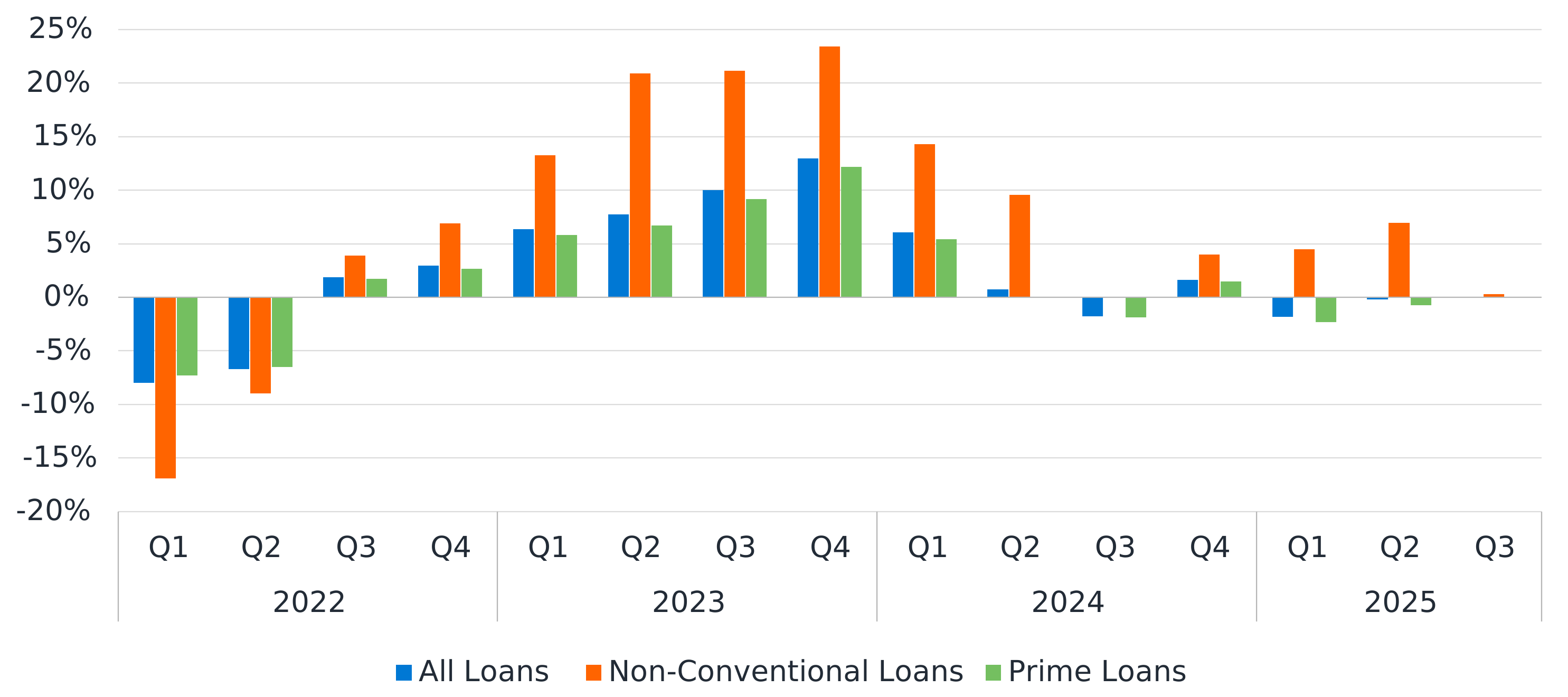
In Q3 2025, bank lenders reported essentially zero change in credit standards for both nonconventional and conventional loans, which seems inconsistent with increasing unemployment and delinquency rates.9 This has halted an upward trend in tightening credit over the last several quarters, following a period of significant tightening by banks in 2023 and early 2024. Appetite for nonconventional loans remains much stronger outside the bank community, with insurance companies increasing their investment holdings and securitization volumes growing year-over-year.10
Figure 9: Percentage of lenders tightening credit
Source: Moody’s Analytics
At the conclusion of Q3 2025, consumers’ expectations regarding inflation in five years had decreased to 3.7% compared to 4.0% in Q2 2025.11 This reading remains elevated as compared to consumer sentiment through the post-COVID rate hike period, indicating that consumers believe prices may indeed rise at a faster rate in the medium term.
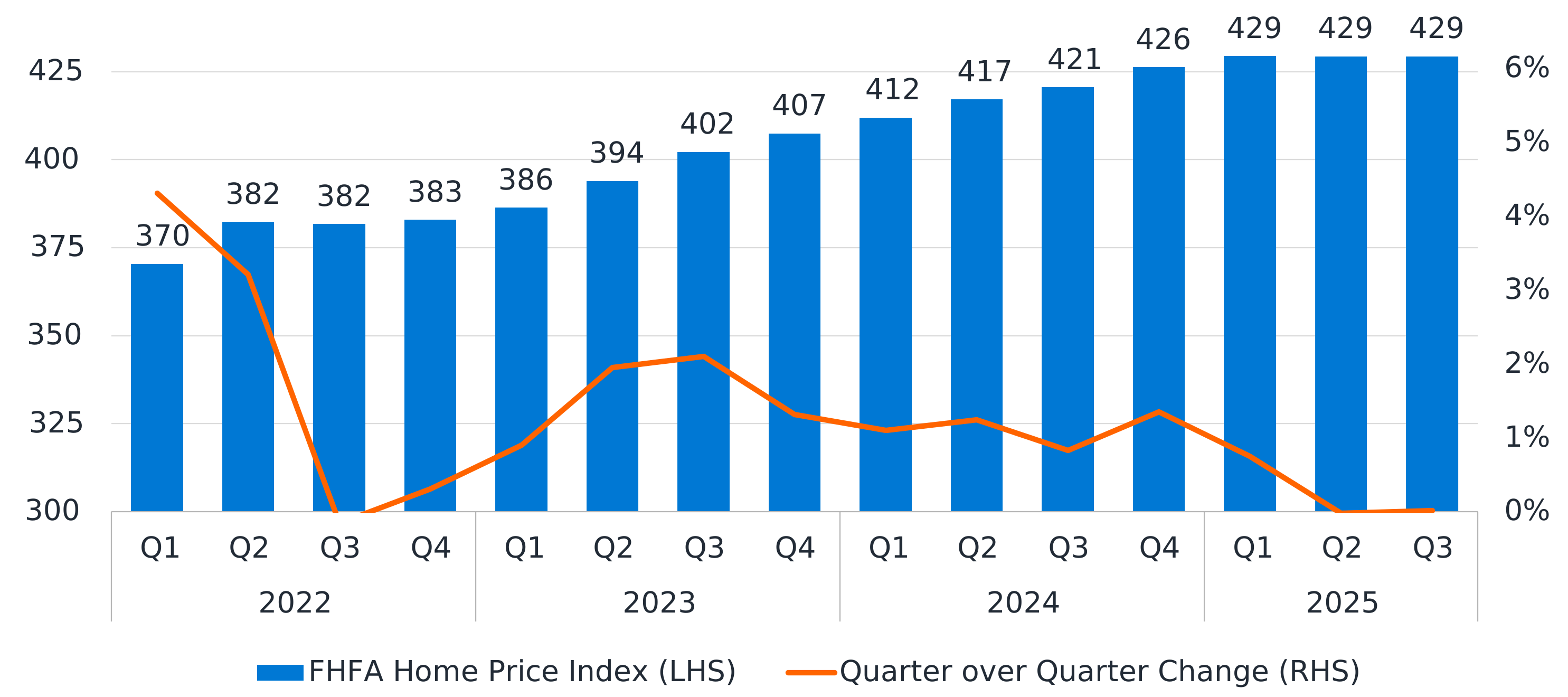
Home prices have remained steady in Q3 2025, with homes remaining constant throughout the first three quarters of 2025.12
Figure 10: Federal Housing and Finance Agency purchase-only home price index (base of 100 in q1 1991)
Source: Moody’s Analytics
Looking ahead
Both Fannie Mae and MBA are forecasting a large increase in refinance mortgages for Q4 2025. Fannie Mae also forecasts continued refinance increases through the first half of 2026, whereas the MBA forecast calls for refinance mortgages to decrease into 2026. Both MBA and Fannie Mae are forecasting a decrease in purchase money mortgages in Q4 2025, which is typical for the seasonality in mortgage production. These forecasts put annualized mortgage production dollar growth on track for a 10% to 20% increase from 2024 to 2025. The outlook for growth from 2025 to 2026 is more diverse, with MBA calling for an increase below 10% and Fannie Mae calling for an increase above 25%. Overall, however, the outlook points to moderate growth driven more by stable purchase activity and a rebound in refinance lending.
The reality is that these production forecasts are heavily dependent on the future path of mortgage rates. The macroeconomic landscape, both on employment and prices, creates meaningful uncertainty regarding mortgage rates over the next several quarters. Both MBA and Fannie Mae forecasts anticipate modest rate relief in the coming quarters that could help support the ongoing recovery of mortgage production and improve lender financial performance into 2026.
1 Taylor, F. (2025, November 18). IMBs Report Production Profits in Third Quarter of 2025. Mortgage Bankers Association. https://www.mba.org/news-and-research/newsroom/news/2025/11/18/imbs-report-production-profits-in-third-quarter-of-2025.
2 Moody’s Analytics. (2025). Data Buffet. Retrieved on December 1, 2025 from https://www.economy.com/products/tools/data-buffet.
3 Federal Reserve Bank of St. Louis. (2025). Market yield on U.S. Treasury Securities at 10-year constant maturity, quoted on an investment basis. Retrieved on December 1, 2025 from https://fred.stlouisfed.org/graph/?g=1KFLF.
7 Graphics for Economic News Releases. (n.d.). Civilian unemployment rate. U.S. Bureau of Labor Statistics. Retrieved on December 1, 2025 from https://www.bls.gov/charts/employment-situation/civilian-unemployment-rate.htm.
8 Center for Microeconomic Data, op. cit.
10 Lee, S. (2025, August 13). Favorable tailwinds drive growth in non-QM securities. National Mortgage News. https://www.nationalmortgagenews.com/news/non-qm-mortgage-backed-securities-see-sustained-q2-growth.
11 University of Michigan. Surveys of consumers. Retrieved on December 1, 2025 from https://www.sca.isr.umich.edu/tables.html.